Sleeve Tattoo Designs For Men Black And Grey
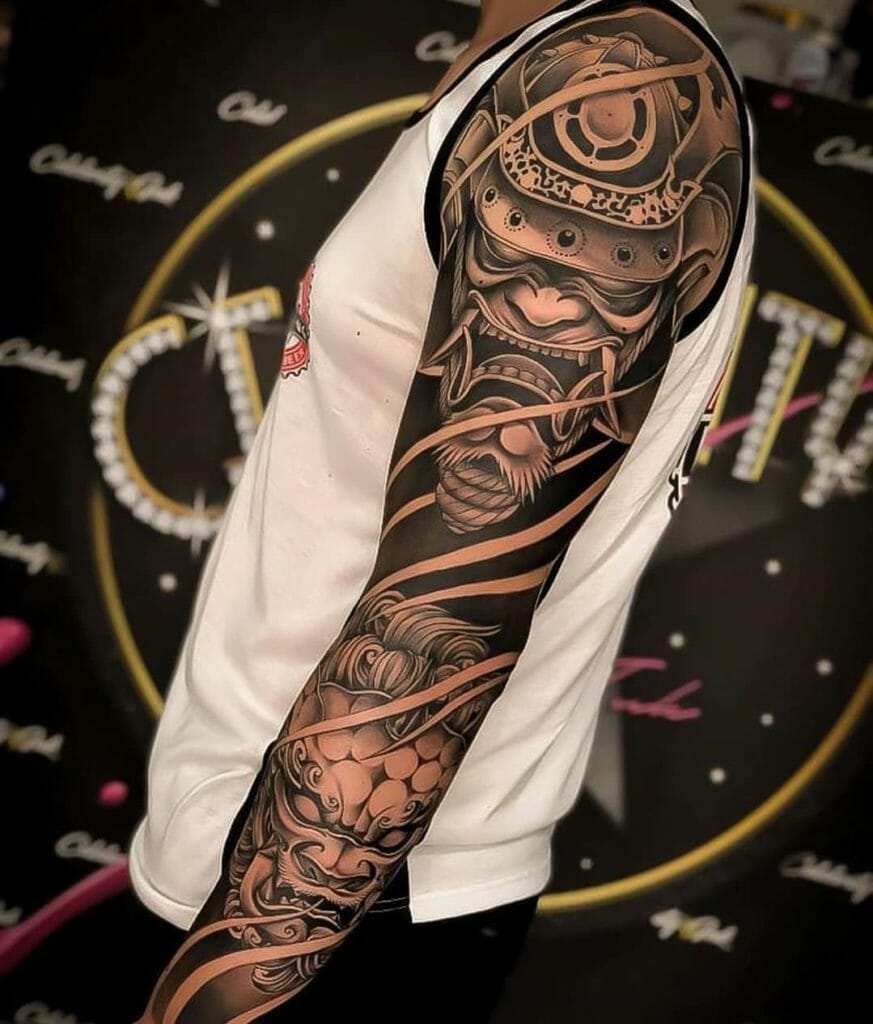
The Enduring Allure of Japanese Sleeve Tattoos A Deep Dive into the Symbolism and Artistry of the Image The image presented showcases a stunning example of a Japanese sleeve tattoo a powerful and captivating art form that transcends mere decoration Its a narrative etched onto skin a visual representation of strength tradition and the enduring influence of Japanese mythology and history This article delves into the intricate details of this particular tattoo exploring the symbolism behind the imagery the techniques employed by the artist and the broader context of Japanese tattoo culture I Unveiling the Visual Narrative A Tapestry of Myth and Power The most striking aspect of the tattoo is its composition Its not just a collection of individual images its a carefully constructed narrative that flows seamlessly down the arm The design features two prominent figures a fearsome samurai mask and a guardian lion each imbued with deep cultural significance The Samurai Mask Menyoroi Dominating the upper arm the samurai mask immediately commands attention These masks known as menyoroi were an integral part of the samurai armor designed not only for protection but also to intimidate the enemy The mask depicted in the tattoo is likely a representation
of a specific type of demon mask such as an Oni or a Tengu These demonic figures are often associated with supernatural strength ferocity in battle and unwavering loyalty The inclusion of the samurai mask signifies courage honor and the spirit of the warrior The artist has meticulously rendered the masks intricate details from the sharp teeth and menacing eyes to the elaborate helmet and ornaments capturing the essence of its formidable presence The mask itself is layered with meaning It can represent the warriors inner demon unleashed in battle or serve as a reminder of the burdens and responsibilities associated with the samurai code of Bushido Furthermore the placement of the mask on the upper arm close to the shoulder symbolizes the weight of these responsibilities and the constant readiness for battle The Guardian Lion Komainu Flowing down the lower arm is the image of a guardian lion known as Komainu in Japanese These mythical creatures often depicted in pairs are commonly found guarding the entrances to Shinto shrines and Buddhist temples They are believed to possess the power to ward off evil spirits and protect sacred spaces The Komainu in the tattoo further enhances the theme
of protection and strength Its fierce expression flowing mane and powerful paws convey an aura of unwavering vigilance The inclusion of the Komainu suggests a desire for protection both physical and spiritual and a connection to traditional Japanese beliefs The lions association with guarding sacred spaces also hints at a reverence for tradition and a commitment to upholding moral principles The Flowing Elements WavesWind Intertwining with the figures are dynamic elements most likely representing waves or wind These flowing lines serve not only to connect the two main images but also to add a sense of movement and energy to the overall design Waves symbolize resilience adaptability and the ability to overcome adversity reflecting the ebb and flow of life Wind on the other hand represents change freedom and the unseen forces that shape our destiny The inclusion of these elements adds depth and complexity to the tattoos narrative suggesting a journey a struggle and the constant interplay of opposing forces II The Art of Ink Technique Style and Mastery Beyond the symbolism the tattoos artistic merit lies in the skill and precision of the artist The piece exhibits several key characteristics of traditional Japanese tattoo art Black
and Grey Realism The use of a predominantly black and grey palette is a hallmark of traditional Japanese tattooing This monochromatic approach allows for a greater emphasis on shading and detail creating a sense of depth and realism The artist has masterfully employed shading techniques to create a threedimensional effect bringing the figures to life on the skin The subtle variations in tone and the meticulous attention to detail demonstrate a high level of technical skill and artistic vision Intricate Detailing Japanese tattoos are renowned for their intricate detailing and this piece is no exception From the individual scales on the samurai masks helmet to the flowing strands of the Komainus mane every element is rendered with meticulous precision This level of detail reflects the artists dedication to their craft and their commitment to capturing the essence of the subject matter Seamless Flow and Composition The success of a sleeve tattoo lies in its ability to seamlessly wrap around the arm creating a cohesive and visually appealing design The artist has skillfully arranged the figures and elements to create a harmonious composition that flows naturally with the contours of the arm The dynamic lines and strategic
placement of the images contribute to the overall sense of movement and energy Use of Negative Space The artist demonstrates a strong understanding of negative space utilizing the uninked areas of the skin to create contrast and highlight the inked elements This technique adds depth and dimension to the tattoo preventing it from appearing cluttered or overwhelming III Japanese Tattoo Culture Tradition Taboo and Transformation To fully appreciate the significance of this tattoo its essential to understand the complex history and cultural context of Japanese tattooing known as Irezumi Historical Roots The practice of tattooing in Japan dates back thousands of years with evidence suggesting its presence as early as the Jomon period 10000300 BCE Initially tattoos were associated with social status and spiritual practices However during the Edo period 16031868 tattoos began to be associated with criminals and outcasts as they were used as a form of punishment and identification The Rise of Irezumi Despite its association with criminality tattooing continued to flourish among certain segments of society particularly among members of the working class and the Yakuza Japanese organized crime syndicates These groups embraced tattooing as a symbol of their identity loyalty and defiance
of societal norms Irezumi the traditional Japanese style of tattooing emerged during this period characterized by its largescale designs intricate details and rich symbolism The Taboo and Social Stigma Due to its association with criminality and the Yakuza tattooing has long been a taboo subject in Japanese society Even today many public places such as onsen hot springs and gyms prohibit individuals with visible tattoos This social stigma has led many Japanese people to conceal their tattoos or opt for smaller more discreet designs Modern Revival and Acceptance In recent years there has been a gradual shift in attitudes towards tattooing in Japan particularly among younger generations The rise of global tattoo culture and the growing popularity of Japaneseinspired designs worldwide have contributed to a greater acceptance of tattooing as a form of artistic expression While the social stigma still persists to some extent there is a growing recognition of Irezumi as a valuable cultural heritage Beyond Decoration A Transformative Experience For many individuals who choose to get a Japanese tattoo its not just about aesthetics its a transformative experience The process of getting a largescale tattoo can be physically and emotionally challenging requiring
patience commitment and a deep respect for the art form The finished tattoo becomes a symbol of their personal journey their values and their connection to Japanese culture IV Conclusion A Legacy Etched in Ink The Japanese sleeve tattoo depicted in the image is a testament to the enduring power of art and tradition Its a carefully crafted narrative that combines potent symbolism with exceptional artistic skill The samurai mask and guardian lion represent courage protection and a connection to traditional Japanese beliefs while the flowing elements add depth and dynamism to the overall design Beyond its visual appeal the tattoo reflects the complex history and cultural context of Japanese tattooing It serves as a reminder of the traditional art form of Irezumi its association with criminality and social stigma and its modern revival and acceptance Ultimately this tattoo is more than just ink on skin its a statement of identity a celebration of Japanese culture and a testament to the transformative power of art Its a legacy etched in ink a visual representation of strength resilience and the enduring allure of Japanese mythology and history It invites the viewer to delve deeper into the rich tapestry of Japanese culture and to appreciate the
artistry and symbolism that make Japanese tattoos so captivating and enduring The wearer carries not only a stunning piece of art but also a connection to a long and fascinating history a visual embodiment of values and beliefs This sleeve tattoo is a story told on skin a powerful statement that resonates far beyond the surface
Download Image:
click download
and right mouse click and Save image As...on new page


Komentar
Posting Komentar